Introduction to Biofilm Detection Lamp by BioDtex
Maintaining hygiene in industries where safety and quality are non-negotiable is a constant challenge. From food processing units to pharmaceutical facilities, contamination risks demand robust monitoring and prevention systems. One of the most persistent threats in these environments is the formation of biofilms—invisible yet highly resilient microbial communities that adhere to surfaces and compromise hygiene standards.
Traditional cleaning and inspection methods often fail to detect or remove these microbial colonies, leaving behind contamination risks that can cause serious health and operational issues. This is where the BioDtex Lamp, an advanced biofilm detection lamp, sets itself apart as a groundbreaking innovation for industries prioritizing cleanliness and safety.
What Are Biofilms and Why Are They Dangerous?
Biofilms are structured communities of microorganisms, such as bacteria, fungi, or algae, that stick to surfaces and form a protective extracellular matrix. Unlike free-floating microbes, biofilms are difficult to eliminate. Their slimy shield protects them from disinfectants, antibiotics, and standard cleaning procedures.
In food production and healthcare facilities, this poses a serious hazard. Biofilms act as reservoirs for dangerous pathogens like Listeria, Salmonella, and E. coli, which can contaminate products, spread illness, and damage reputations. Their invisibility to the naked eye makes them even more challenging—by the time contamination becomes obvious, it may already have escalated.
This invisible threat underscores the need for specialized biofilm inspection technologies like the BioDtex Lamp, which make microbial risks visible before they become costly problems.
Limitations of Traditional Detection Methods
Many industries already follow rigorous hygiene protocols, but biofilms often slip through the cracks. Common detection and testing methods include:
-
Visual checks – Biofilms are typically transparent and invisible under normal lighting, rendering manual inspection ineffective.
-
Microbiological swabs – Swabbing surfaces and sending samples for laboratory culture can confirm contamination, but results often take days.
-
ATP testing – Measures organic matter quickly but cannot reliably distinguish between surface debris and entrenched biofilms.
-
Routine cleaning – May remove loose debris but often fails to eradicate biofilms shielded by their protective layer.
The gap lies in the inability to detect biofilms in real time. Without instant visibility, cleaning teams may overlook contamination hotspots, allowing biofilms to persist and multiply.
The BioDtex Lamp: Making the Invisible Visible
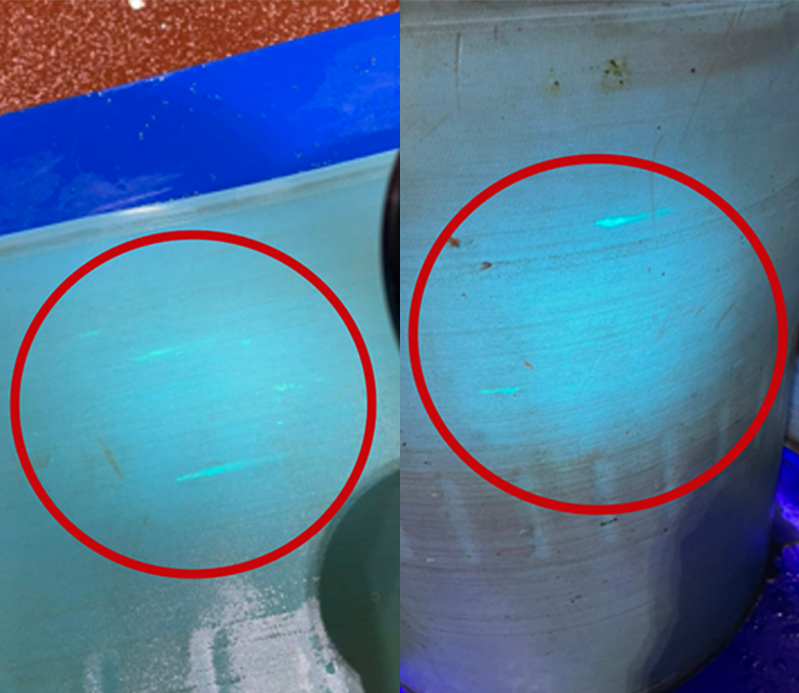
The BioDtex Lamp is a cutting-edge biofilm UV detection lamp designed to transform the way industries manage microbial risks. Using advanced UV fluorescence technology, it makes biofilms clearly visible on surfaces during routine inspections.
This simple yet powerful solution allows sanitation and quality teams to detect biofilms instantly, without waiting for lab results or relying on guesswork. By exposing contamination in real time, the lamp enables targeted cleaning, preventing the spread of harmful pathogens.
Key Benefits of the BioDtex Lamp
-
Instant Biofilm Detection
The biggest advantage of the BioDtex Lamp is its ability to provide immediate results. Instead of waiting hours or days for test confirmations, teams can identify contamination hotspots instantly. -
Enhanced Biofilm Inspection
With real-time visibility, cleaning crews can focus on affected areas rather than wasting resources on unnecessary deep cleans. This precision enhances overall biofilm inspection and sanitation efficiency. -
Supports Regulatory Compliance
Food, pharmaceutical, and healthcare industries are heavily regulated. The BioDtex Lamp strengthens compliance efforts by ensuring hygiene checks are proactive, reliable, and easy to document for audits. -
Cost Savings
By preventing contamination-related recalls, product losses, and equipment damage, the lamp offers significant operational savings. It also reduces labor costs associated with ineffective cleaning practices. -
Consumer Confidence
For food and healthcare businesses, consumer trust is paramount. Using advanced biofilm detection tools demonstrates a commitment to safety, enhancing brand reputation and customer confidence.
Applications Across Industries
The versatility of the BioDtex Lamp makes it a valuable asset across a wide range of industries.
1. Food and Beverage Production
Surfaces in direct contact with food—such as conveyor belts, cutting machines, and packaging lines—are common sites for biofilm formation. The BioDtex Lamp ensures these critical control points are thoroughly inspected, reducing the risk of foodborne illnesses and extending product shelf life.
2. Dairy and Meat Processing
Biofilms thrive in moist environments like milk storage tanks, meat cutting equipment, and cold storage units. With the BioDtex Lamp, processors can carry out reliable biofilm inspection, ensuring hygiene standards are consistently met.
3. Fresh Produce Handling
Washing lines and packaging facilities for fresh fruits and vegetables are particularly vulnerable. Since these products are often consumed raw, identifying contamination risks before packaging is critical.
4. Healthcare and Pharmaceuticals
Biofilms are also a threat in hospitals and laboratories, where microbial growth can compromise sterile environments. The BioDtex Lamp helps identify contamination on surfaces and equipment, supporting infection control measures.
5. Industrial and Water Systems
Beyond food and healthcare, biofilms can cause corrosion in pipelines, cooling systems, and water treatment units. The BioDtex Lamp provides quick detection, helping prevent operational inefficiencies and costly damage.
Operational and Economic Advantages
The introduction of the BioDtex Lamp into hygiene management systems has measurable operational and economic benefits:
-
Targeted Sanitation: Reduces wasted effort by focusing on actual contamination zones.
-
Reduced Recalls and Waste: Prevents contamination from reaching consumers, avoiding costly recalls and spoilage.
-
Improved Efficiency: Enables faster turnaround in cleaning and inspection routines.
-
Extended Equipment Life: Prevents microbial corrosion, reducing long-term maintenance costs.
-
Audit Readiness: Provides visible proof of inspections, helping companies prepare for audits and inspections with confidence.
By combining safety with efficiency, the lamp helps organizations strike the right balance between compliance and productivity.
A Step Toward Proactive Hygiene Management
For too long, industries have relied on reactive approaches—waiting for lab results, customer complaints, or regulatory findings before taking action. The BioDtex Lamp marks a shift toward proactive hygiene management, where microbial threats are detected and controlled in real time.
This proactive stance not only ensures compliance but also strengthens consumer trust and reduces the likelihood of costly incidents. In today’s competitive and safety-conscious environment, adopting advanced biofilm detection tools is no longer optional—it’s a necessity.
Conclusion
Biofilms represent one of the most stubborn and invisible threats to hygiene in industries where safety cannot be compromised. Their ability to resist cleaning and remain undetected makes them a recurring source of contamination. Traditional methods, while useful, fall short in providing instant, actionable insights.
The BioDtex Lamp, with its advanced UV-based
biofilm detection technology, bridges this gap. By making invisible microbial colonies visible in real time, it empowers businesses to conduct effective biofilm inspections, take targeted corrective action, and maintain the highest hygiene standards.
From food and beverage to healthcare and industrial applications, the BioDtex Lamp is redefining microbial risk management. For organizations seeking safer products, stronger compliance, and greater consumer trust, it stands as a powerful solution to the age-old challenge of biofilms.
By introducing the BioDtex biofilm detection lamp into regular hygiene protocols, industries can safeguard their operations, protect their customers, and set a new benchmark for hygiene excellence.


Comments
Post a Comment